The meteoric radar
Technically, a meteoric radar is an apparatus that exploits a physical property of the atmosphere: when a body (meteor, debris, etc.) enters the upper layers of the earth's atmosphere at very high speed, it impacts the first molecule of the atmosphere it encounters along its walk.
The consequence of this impact is the disintegration of the corpuscle and the generation of free ions and electrons along the meteoroid trajectory. A long and narrow cylinder is then created. This cylinder will persist for a short period of time before the process of recombining the ions with the electrons dissolves it.
For the duration of this short period, if the free electrons are hit by an oscillating electromagnetic field (transmission), they are induced to oscillate with the same frequency and with the same polarization of the transmission signal. They therefore behave, in turn, like a transmitter, or if you like, like a repeater.
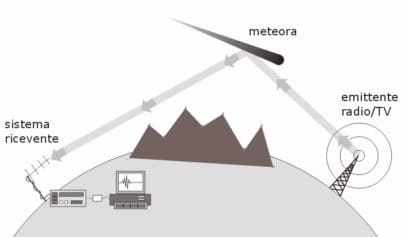
Consequently, from the radioelectric point of view, this cylinder behaves like a reflecting object, similar to an airplane, a satellite, or any other flying object. This phenomenon is called “meteor scatter” (see Figure).
If there is a radio transmitter that illuminates a certain portion of the sky and a receiver, tuned to the same frequency, we can hear rapid sounds corresponding to the instants in which the cylinder of free electrons oscillates on the same frequency of the transmitter.
Almost all amateurs around the world stop there, simply listening to this sound, or recording the video screens generated by audio signal plotting programs.
Instead, our idea was to try to measure and analyze the physical characteristics (duration and amplitude) of the signal.
Technical features
Obviously, building or buying a radio transmitter of the necessary power is out of an amateur's reach, and therefore, it is necessary to use transmitters of others. RAMBO exploits the signal emitted by the military radar transmitter of Graves (France), (Figure 2) which transmits continuously in the VHF at very high power (the frequency is approximately 143 MHz).
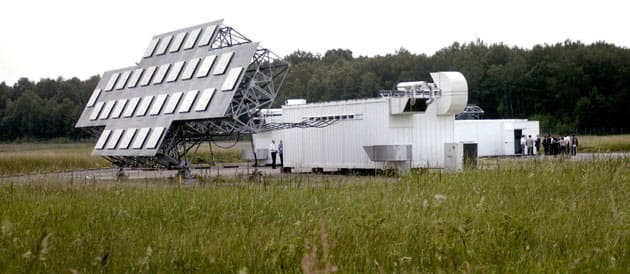
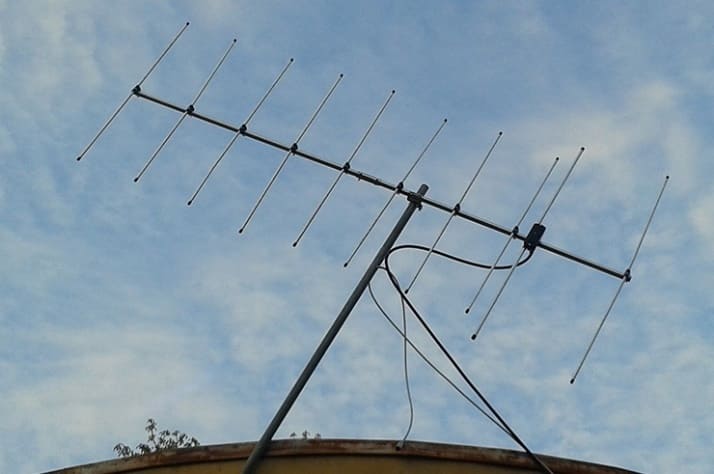
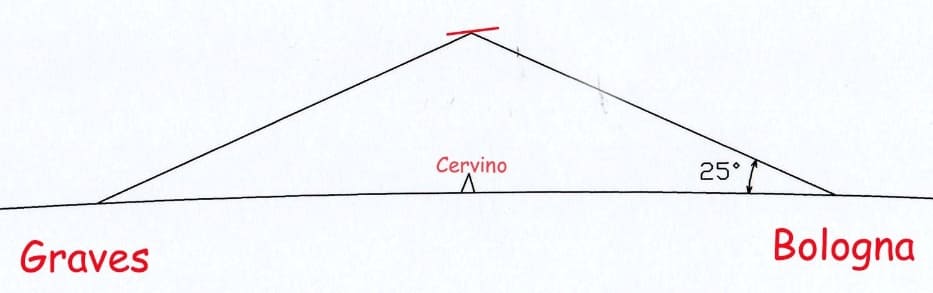
Its transmission is directed upwards and therefore, both for this reason and for the opposite shielding from the Alps, we can’t receive it from Bologna directly. Our receiver has a 10-element directive Yagi antenna (Figure 3) pointed in azimuth in the direction of the transmitter, and in declination at about 25 degrees, where we calculated to be the reflection point with the upper layers of the atmosphere (Figure 4 ).
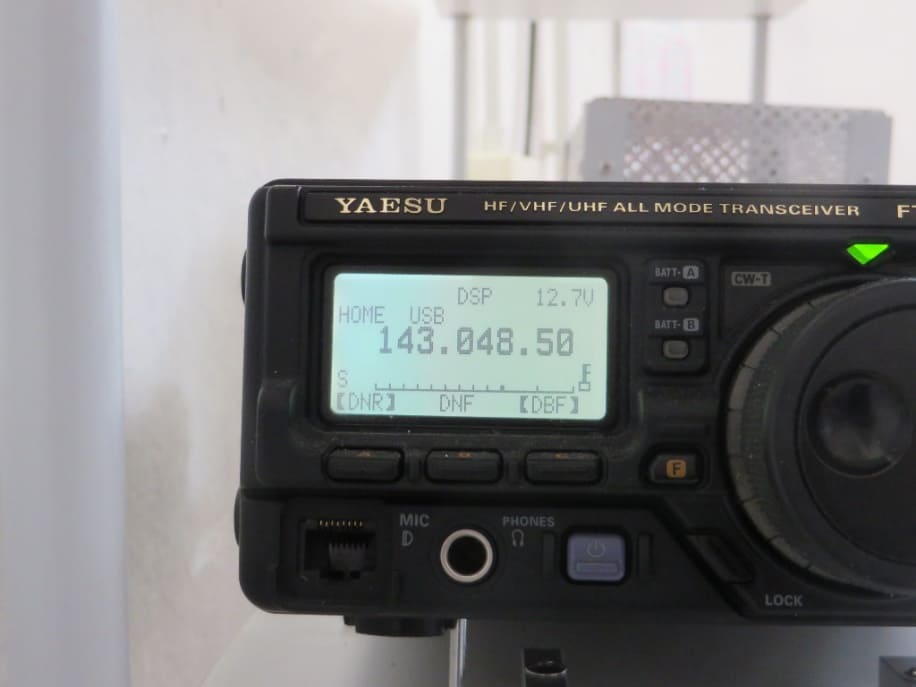
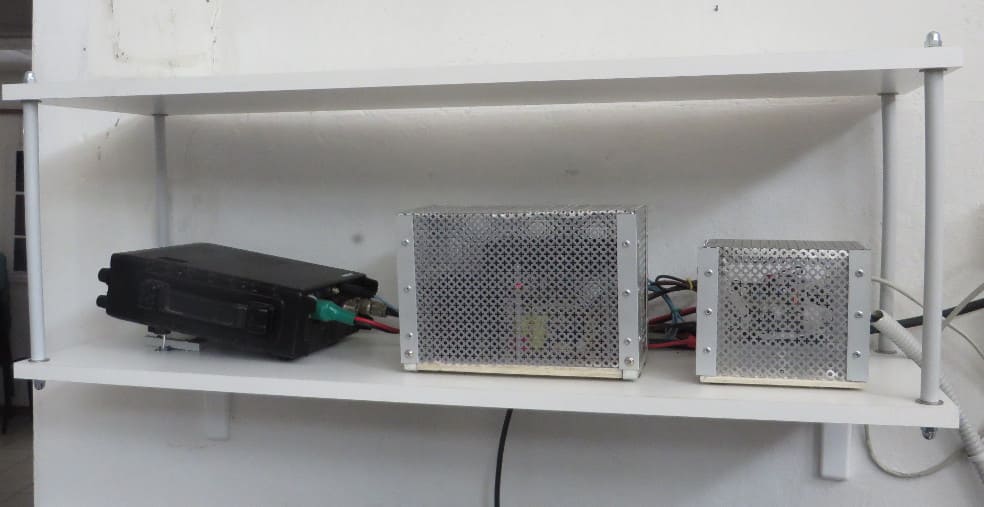
Our receiver is a Yaesu FT 857
The electronic project
For the analysis of the audio output coming from the radio receiver we chose the Arduino microprocessor. With it, we first sample the signal using Arduino as an analog-to-digital converter and then perform the measurements.
Over the course of months and months of attempts, we have produced various versions with the aim of both getting the most out of the information available and eliminating the false positives (a lot of false positives) generated by the surrounding environment, both natural and anthropic.
With the sixth version of RAMBO, we have finally arrived at a definitive project. Now Arduino no longer functions only as an amplitude meter (V meter), but simultaneously also acts as a frequency meter.
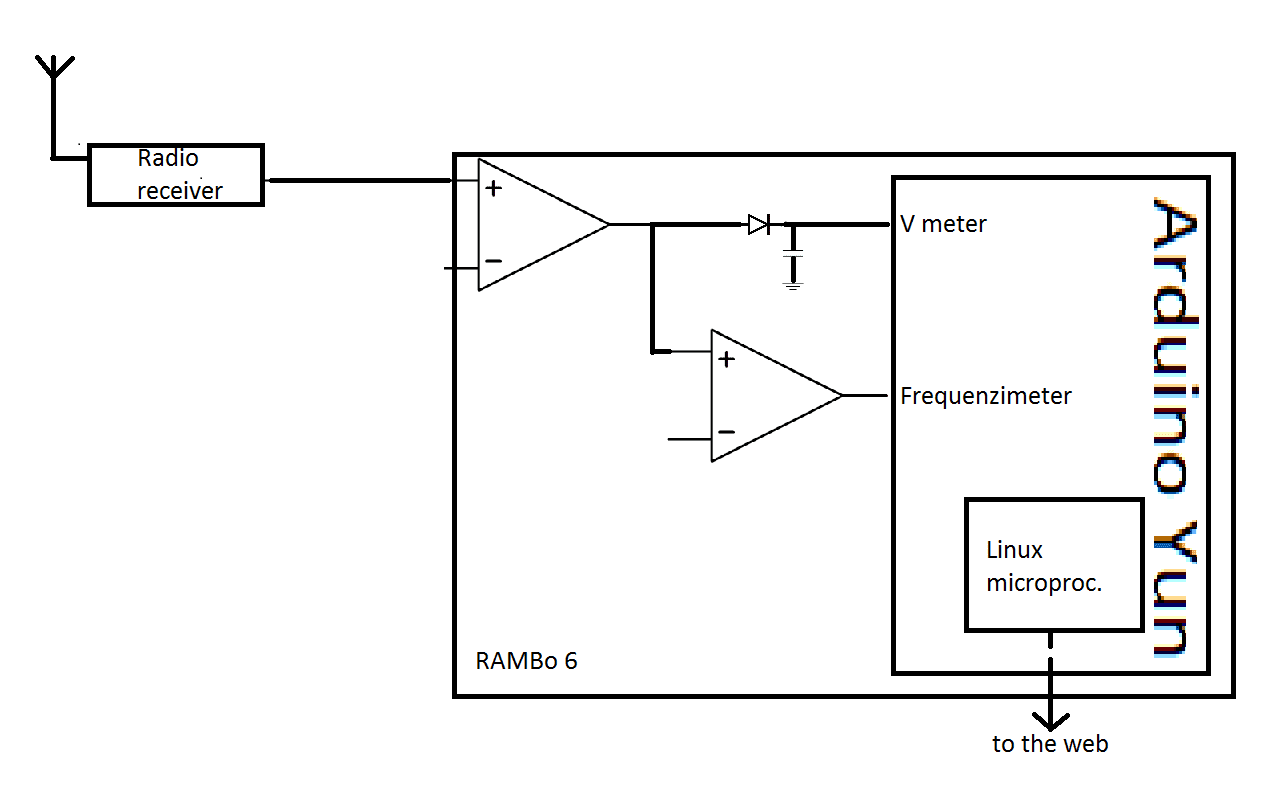
The combination of the two functions allows us to perfectly
discriminate between meteors and electrical transients..
With this version, we now have a system that no longer suffers from
"false positives". We have also improved the circuit that allows
the measurement of signal amplitude, a measure that, together with
the duration of the echo, provides us with information on the mass of the meteoroid.
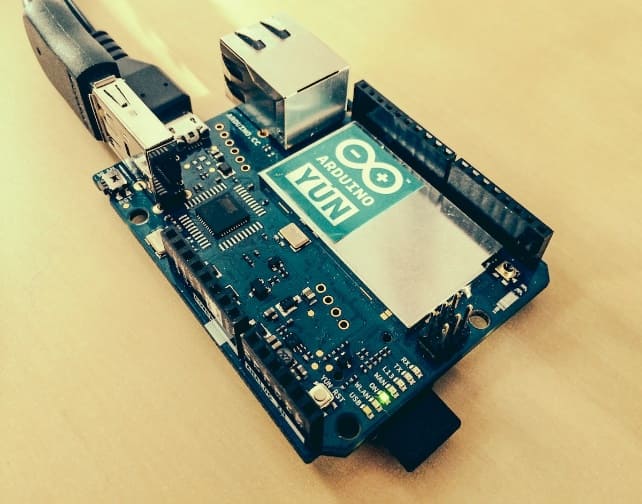
A further RAMBO 6 innovation is given by the transition to ArduinoYun, a device that also allows us to send daily the data as an email attachment.
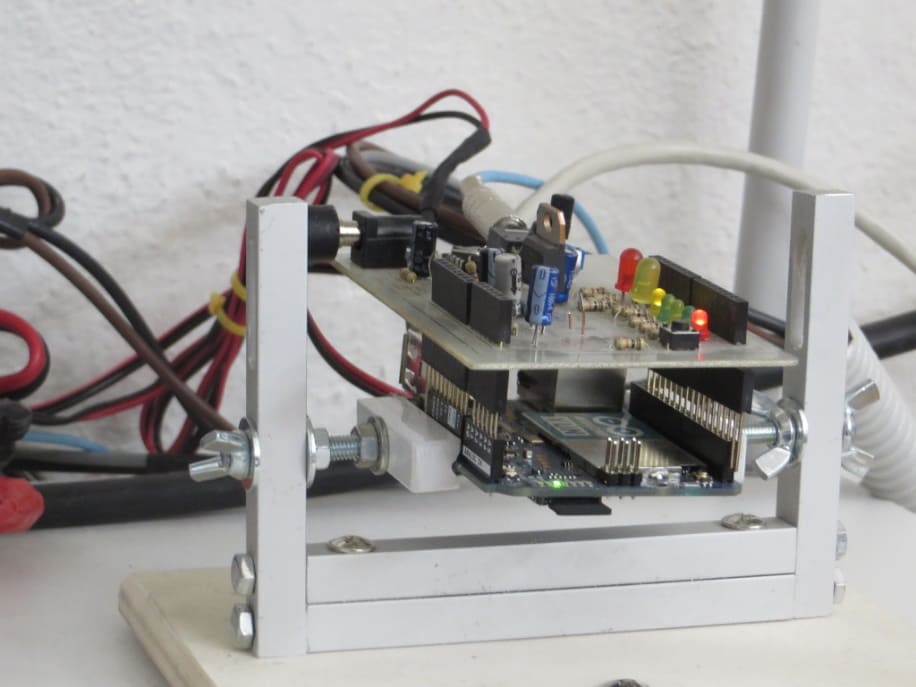
Before the analog-to-digital conversion made with the Arduino Yun, we created a board in which we inserted two differential amplifiers, a potentiometer for adjusting the audio level and seven LEDs to monitor the Arduino live operation.
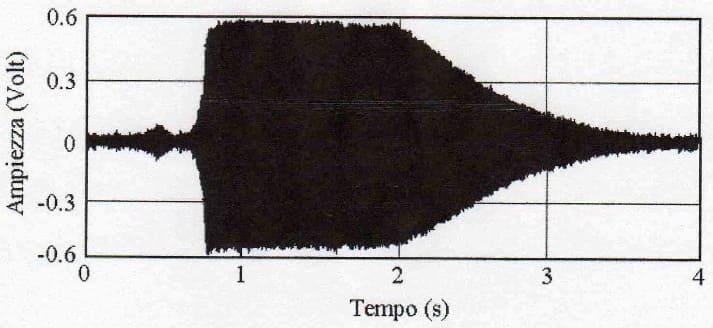
One of the recorded meteoric echoes is shown in Figure 5 in its representation as a function of time and audio signal amplitude
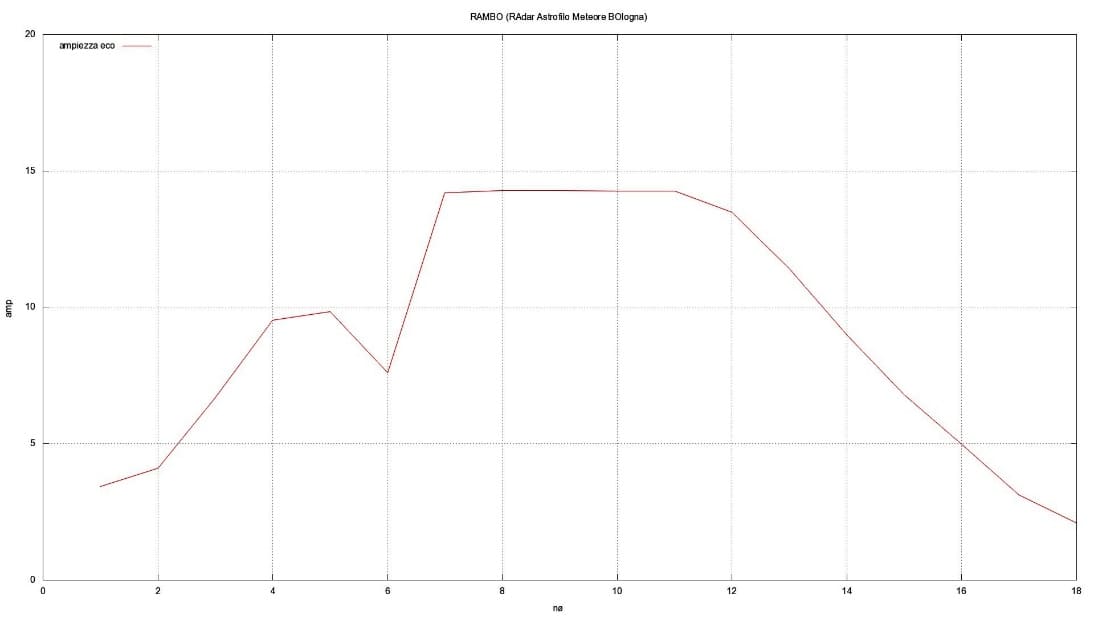
Note how this echo (hyperdense radio meteor) faithfully approximates the trend of similar hyperdense meteor recorded by the CNR of Vedrana di Budrio (Bologna).
The audio signal produced by the receiving device, digitized and analyzed in frequency, is then logged in a text file in which the following parameters are recorded:
- Progressive event number
- Event number per hour
- Date and time (UT)
- Echo length (milliseconds)
- Audio signal max amplitude
- Integral of the waveform
The results
The observations results are visible in the following three pages, in which we graph the meteoric echoes amplitude and duration and the hourly rate in different temporal resolutions: 5 minutes, one hour, one day.